We all have our own goals in life. Whether you are trying to become a social media influencer, or you are trying to create a multi-million-pound company, our health is a key metric in persisting in our journey towards success. As much as you may not recognize it now, poor health is one of the fastest ways to slow your progression. Although success is built over a long time, we should still not let the quality of our health slip away.
Have you ever noticed your professional drive to do more significantly drop when your health has been in bad shape? You are not the only one. Everyone experiences the negative effects of getting ill and having their health put at risk. For dream chasers who want to be the best in their field, so much time is spent on taking action, which their health falls into disrepair. If you are one of these people and you want to know exactly why you should be investing in your health to support your journey to success, read on!
How can health affect your success?
The question of how poor health can affect your overall success in life is simple. Poor health leads to a multitude of negative knock-on effects, from low attention spans to more extremities such as being left in hospital, stopping you from taking action towards your goals. When we look at success, it would only be fair to highlight some of the sacrifices that must be made to reach targets, especially if they are life-changing. Stress, lack of sleep, low exercise and poor nutrition are unfortunately common experiences for the entrepreneurs and most successful people amongst us. The key to making health a metric in guiding you towards your goals, instead of holding you back from them, is to make a healthy lifestyle non-negotiable.
Successful people who focus on their health
If you are looking for an extra reason to focus on your health, here is a list of household names that focus on their health as a way to maintain their success and continue getting great results:
Elon Musk – Tesla and newly renamed X (Twitter) owner is investing in his health, even with all the work he has to do. From weightlifting to intermittent fasting, he is a great example of a celebrity who has invested in their health to ensure their results are of exceptional standards.
Beyonce – Beyonce is a music mogul and sensation celebrity of our century. Following a variety of diets such as vegan, whilst maintaining hours of cardio and weight training to get her show-ready, Beyonce wouldn’t be where she is today without the intuition to take her health seriously.
Mark Zuckerberg – Facebook and Meta creator Mark Zuckerberg owes parts of his success to his nutrition and balanced lifestyle choices. Revealing his caffeine intake is zero, Zuckerberg is still able to perform amazing work, without damaging supplements such as caffeine.
Habits to implement for better health & success!
Sleep for information retention
Sleep is king. One of the easiest habits to let slip when you are striving for an impossible goal is the hours of sleep you get during the night. Sleep is an innate, non-negotiable habit that all humans must engage in if we hope to function during the day. Adults need 7-9 hours of sleep per day. Despite some suggestions, sleep experts say that getting the full length of sleep is much more beneficial than trying to catch up with daytime naps. During sleep, our brain processes information that has been taken in during the day. Without this sufficient level of sleep, our brains will not only struggle to retain information, but this can ultimately lead to low productivity and also poor memory.
Habits to help:
If you have been struggling to fit in a good sleep schedule whilst striving for success, start by making the bedroom strictly for sleeping. If you allow the bedroom to become a part-time office, your brain will associate this environment with work, and prevent your brain from falling into the relaxed state necessary for deep sleep. Also, consider reading before bed, and avoiding screen time. Fiction books based on your goals niche might be tempting, but it would be best to read something completely different such as a nonfiction piece to take your mind off the grind before sleep!
Nutrition for high energy levels
What we put into our bodies will manifest into the physical self. If you are trying to achieve a goal, you perhaps lack the time to cook three meals a day. This has to stop, now! A balanced and nutritious diet made up of the foods that make our bodies feel good will lead to much higher energy levels that do not need to be accompanied by fatty, sugar snacks. A poor diet can lead to fatigue, poor dental health and more serious digestive issues that can worsen over time.
Habits to help:
To save yourself an emergency trip to your trusted dentist, make an effort to have a nutritious diet, made up of enough calories and food groups to maintain the balance you need. As an entrepreneur striving for success, it may feel like you have little time to cook all day, so instead prepare your food for the week in bulk on Sunday. This will take the stress off the rest of the week, and give you more time to work towards your goals!
Mindfulness movements
Mindfulness has become a part of mainstream culture in recent years. For busybodies working tirelessly to reach their desired levels of success, mindfulness is not at the forefront of their minds. Despite this, some of the most successful people amongst us today swear by mindfulness as a metric to help them regulate their moods and work harder towards their goals. With this, hard work can often lead to high levels of cortisol, which is the stress hormone. Mindfulness allows you to create your own clarity, and regulate your mood no matter the burdens you are facing
Habits to help:
To implement mindfulness into your busy schedule, start small. A simple 5 minutes of meditation in the morning as you drink your morning coffee can make a world of difference. This is a great way to set yourself up for the day and give you the mental space to take on any of the challenges you will face. Keep on adding more time, and listen to a guided meditation video if you are struggling to quiet your mind of ideas!
In the article, The art of switching off, Andrew Gazdecki, Founder and CEO of MicroAcquire, writes, “You are a complex organic organism that needs intervals of rest and stimulation to operate at your best.”
However, the art of switching off does not come naturally to most professionals or leaders. Most of you are at a severe loss of being unable to switch off your work mode at the end of the day or when you are away from work. Your corporate culture is mainly responsible for it. Driven by accountability or responsibility, you are expected to deliver whatever it takes. The result is that your professional life seeps into your personal world. This breach of balance and boundaries has several negative consequences.
In this article, I will share six things you can embed in your work routine to make switching off effortless in a way that will make you far more productive than before.
How I became more productive by switching off
I have been in corporate life for over 20 years. My laptop and email were my life. As I owned more responsibilities, finishing the work by the end of the day became harder and harder, passing each day. Back home, I used to spend close to 4 to 5 hours over and above regular working hours simply getting through email backlogs to avoid the anxiety of missing out on delivering something important.
Soon, I realized that spending extra hours at home was not giving any results. A couple of years ago, I decided to stop using my work laptop after 5 PM. or at the end of the day.
At the outset, there were temptations to open the laptop at home. Soon, the number of unaddressed or unread emails approached 1000, which continued to climb up with each day passing.
Initially, this was uncomfortable for me. I kept on thinking I might be behind on something I must do. The next day morning, I would go through a newly grown backlog of emails. But then I noticed that only one to two percent of senders actually bothered to send me follow-up reminders for action or response. This observation gave me a crucial insight – The remaining emails had lower priorities. Those emails did not need immediate attention and were not worth my evening hours beyond the work hours. Reading those emails could wait until the following day.
Seeing that nothing really collapsed night after night, I adopted it as a permanent practice to switch myself off from work emails at 5 PM every day.
The result of this has been incredible.
Within one year of beginning that practice, I wrote five books, delivered over 50 speeches, and got featured in over 100 media outlets while strategically using my late evening hours. I have never been so productive earlier when I used to think that I was doing much work.
Why must you switch off in the modern world?
My personal experience with success after switching off as a regular practice has taught me some vital lessons.
First, keeping yourself switched on is not always an indicator of great productivity. While it might seem counterintuitive, you are being far less efficient than you think by not switching off.
Second, it is imperative to understand that most of us think about productivity in the context of being effective in the workplace. However, it is equally essential to be productive in your personal life to enjoy time with your family and take your passions or hobbies forward. By switching off from work, you are balancing out the productivity in all walks of your life.
Third, staying always on could cause disengagement, contrary to our beliefs. The research titled How to Recover from Work Stress, According to Science, published in the Harvard Business Review, shows that the mere presence of your phone, the constant reminder of unresponded emails, or being logged in even after work, in an attempt not to miss out on any urgent tasks leaves you unable to detach from work. The inability to disconnect from work is not a sign of an efficient professional. Instead, it contributes to reduced well-being and work engagement.
Fourth, constantly being in work mode and refusing to switch off makes you more likely to get burnt out. The World Health Organization even classified burnout as an occupational disease in 2019. The experience of burnout includes feeling exhausted, energy getting depleted, increased cynicism toward the job, and an eventual decline in professional efficacy.
Such negative consequences on job performance and personal well-being call for making a permanent change in your perspective and routine.
What can you do?
Work smarter, not harder – this adage governs modern-day workplace productivity. Here are six tips for switching off as a tool for success.
1. Get over the fear of missing out (FOMO)
Modern professionals are fearful of being left behind or losing something significant amidst the perceived race or competition. The most effective way to combat this fear is by asking yourself – Am I truly being productive by staying “always on”?
2. Shift your focus on outcomes rather than hours
Productivity is no longer equated with the number of hours spent working or always being available. Productivity at the workplace is now determined by outcomes. For instance, a salesperson could be busy making a thousand cold calls for weeks in an attempt to fill the assigned quota, while one smart salesperson could just analyze ten top repeat buyers from the database in fifteen minutes and approach them to attain their quota with a single sale. The one who achieves the said quota (or outcome) in the shortest possible time is deemed highly productive. Thus, productivity is not about time spent on activities but how quickly you attain results.
3. Create clear boundaries when your work ends
It’s important to create clear boundaries not just for yourself but also to uphold these within your team. For example, saying, “I am unavailable from work after 5 PM” or “I’ll be offline.” “I can only respond to emails before 5 PM”. This practice not only allows others to know your availability but also gives you clarity and mental reassurance that you are not missing out on anything urgent.
4. A productive routine using time-blocking
Establish a daily routine that balances time for hands-on tasks that require immediate attention and presence. For example, dedicating the first 20 minutes of the work hours to respond to pending emails from the day before. Gauge the urgency of tasks and move the less urgent ones to the next day. Doing so makes you less likely to experience stress and burnout and more likely to be seen as a committed professional.
5. Negotiate more time
Ashley Whillans, behavioral scientist and Harvard Business School professor, explains in her TED Talk, 3 rules for better work-life balance, that it’s important not just to negotiate salary as an employee but also to negotiate more time. No matter you are a manager or an employee, negotiate reasonable deadlines and extensions when required so that you do not take work into your personal boundaries.
6. Lead by Example
“Permission to switch off and disconnect starts from the top,” writes Scarborough, Chief People Officer at Adaptavist. If you are a manager or a leader, it’s even more crucial to establish a work culture that respects time and boundaries. Many managers give in to unreasonable aggressive timelines of their higher managers and end up transferring it downstream. The managers need to set it right for themselves first. Begin by establishing your own routine and steps for switching off.
End Note
Switching off contributes to more productivity and overall well-being, as opposed to being constantly logged in or available for work, which negatively affects professional efficacy and personal health. Whether you are a manager, leader, or an employee, inculcating this habit in your daily routine is the need of the hour. Begin by establishing your own routine and steps for switching off.
Affirmations help you bring mental images, motivate and keep you focused on accomplishing your goals. They create positive vibes and help manage your time. They reinforce your inner voice.
They help you take a step closer to your ideal mindset with a positive, right, and strong attitude. They enhance your longevity as you enjoy living for a longer time with optimism.
They keep you happy and help you lead your personal, professional, and social life successfully. They purify your thoughts and inspire you to dream and achieve big. You begin to think that everything is possible in this world.
Research shows that we get around 50,000 to 60,000 thoughts in a day and most of them are negative.
Hence, it is essential to convert negative thoughts into positive thoughts through affirmations. Life becomes truly great when we can think positively and contribute constructively to make a difference in the lives of others.
“You will be a failure until you impress the subconscious with the conviction you are a success. This is done by making an affirmation which ‘clicks.’” ―Florence Scovel Shinn
Everything depends on your mind. Your thinking will create magical words that inspire and mesmerize the people around you. Here are some tips to affirm yourself positively:
Appreciate yourself. Look at the positive things within yourself. In the morning, think of the good things you will do throughout the day. In the night, think of the good things you have done through the day before you sleep.
Use sentences such as “I can do it” or. Use the letter ‘I’ to affirm yourself. Tell yourself, “I am full of energy and that gives me joy”. Or “I forgive those who have hurt me”. These sentences bring a lot of change in your thought process and help you to calm down.
Use present tense in your statements to become optimistic and achieve maximum outcome. That tells you, what you said is your state of mind now. It is not a future goal or a quality of the past.
Surround yourself with motivational slogans. Take out five minutes to find a motivational quote of your choice every day.
To apply affirmations, remove negative thoughts from your mind and replace them with positive thoughts. For example, instead of thinking “This is going to be difficult”, think rather, “There are some challenges here and it will be fun to overcome them.”
Prepare a few positive affirmations that suit your age, expectations, and passion. Repeat them. They will creep into your subconscious mind and convert your thought process positively. Once the messages are ingrained in your subconscious mind, your behavior will improve automatically.
Wayne Dyer remarked, “My favorite affirmation when I feel stuck or out of sorts is: Whatever I need is already here, and it is all for my highest good. Jot this down and post it conspicuously throughout your home, on the dashboard of your car, at your office, on your microwave oven, and even in front of your toilets!” Above all, look at the door that is open, not the one that is closed.
James Allen said, “All that you accomplish or fail to accomplish with your life is the direct result of your thoughts.” Whether you want to succeed or fail, it is in your hands as your thoughts will lead to actions. When your thoughts are positive, your actions will be positive. Here are some techniques to convert your thoughts into positive action: Replace “if” with “when,” “should” with “could you,” “hopefully” with “certainly” and “I hope” with “I expect.” Do not think about what you do not have. Think about what you have. Do not say, “Have a great day!” but say, “Make it a great day!” Never say, “Do not worry”. Always say, “Have faith”. Swapping a few words while speaking can convert you into an exceptional achiever. For instance, swap “but” for “and”; and “have to” for “want to,” and you will find an amazing difference in your thinking process.
Write down your affirmations in a journal and read them before you go to bed and when you wake up. Do it regularly because it helps the affirmations enter into your subconscious mind easily giving you amazing results.
Do you think leaders should be tall and handsome? Do you opine leaders must know everything? Do you think leaders must have a magic wand? Do you think women cannot make good leaders? Do you think leaders should be intelligent with a strong academic background?
Then you need to reconsider your views on leaders and leadership. There are several myths associated with leaders and leadership. And there are several definitions of leader and leadership. If you hit Google you get a huge number of hits on leaders and leadership, and many definitions of leadership. Hence, before we define leader and leadership, it is essential to debunk several myths about leaders and leadership.
Myth # 1: Leaders are born, not made.
Truth: Several theories are highlighting various aspects of leadership such as skills theory, behavioral theory, great man theory, trait theory, etc., Previously people believed that either people had leadership qualities, or not.
Truth: People often think that leaders must be tall with great height so that they will be able to influence others. No doubt, having a great height is an asset but some great leaders were short in height but achieved greatness. For instance, Alexander was short in height but became great through his conquests more than 2,300 years ago.
Although Adolf Hitler failed during the Second World War, he was a leader who was short in height. Similarly, Mahatma Gandhi was also short in height but he achieved India’s independence through truth and non-violence. Hence, height is not the criterion to become a leader.
Myth # 3: Leaders must be handsome.
Truth: Leaders must walk their talk and set an example for others to follow. They must have a vision, be able to influence others, build successful teams, motivate, and finally accomplish their goals and objectives. Hence, there is no connection between their roles and physical appearance. For instance, Abraham Lincoln was not good-looking, but he proved to be one of the best presidents of America.
Myth # 4:Leaders must be highly intelligent.
Truth: Numerous examples prove beyond doubt that leaders hail from an average academic background. When we look at the leaders of Fortune 500 companies, it reveals that more than 50 percent of CEOs hail from an average academic background.
However, having an academic qualification is an asset for a leader. But every leader must not be academically intelligent. When we look at Richard Branson, Bill Gates, Michael Dell, Steve Jobs, and Mark Zuckerberg, they are all college dropouts. Hence, we can emphatically conclude that most leaders have average intelligence.
Myth # 5: Leaders must be extroverts.
Truth: Some leaders are introverts yet proved their leadership qualities. Steve Jobs of Apple Computers was an introvert who proved as an innovation legend during his lifetime. It is the nature of people either to be introverts or extroverts, and it has nothing to do with leadership.
Myth # 6: Leaders must be veterans.
Truth: Having experience and being older is an asset to leaders as they make fewer mistakes, and benefit from their vast experience and age. At times, it proves to be costly for these veterans as they have preconceived ideas with a regimented mindset.
The young have fire in their bellies and are ready to experiment and explore their ideas, and mostly they achieve and succeed in their lives. Several leaders proved their leadership potential at a relatively young age. For instance, Alexander, the Great achieved greatness by the age of 34 itself and led people of all age groups despite being young.
Various business leaders such as Michael Dell, Mark Zuckerberg, and Bill Gates proved as business leaders at a young age itself. And Barack Obama has become the president of America at the relatively young age of 47 and also, John F. Kennedy became President at a young age. These young leaders broke the age-old myth by leading the veterans.
“The most dangerous leadership myth is that leaders are born ― that there is a genetic factor to leadership. This myth asserts that people simply either have certain charismatic qualities or not. That’s nonsense; in fact, the opposite is true. Leaders are made rather than born.” ―Warren G. Bennis
Myth # 7: Leaders must be charismatic.
Truth: Charisma is an exclusive charm and magnetism some people possess. It is the ability to dress well, speak well, present with positive body language, and radiate constant energy and enthusiasm. If leaders possess charisma it is an asset, but not possessing it, is not a liability. Some leaders proved their best without any charisma. Succinctly, character counts, not charisma.
Myth # 8: Leaders must be orators.
Truth: It is a fact that good leaders are great orators, but it is not necessary that leaders must be orators. For instance, Alex Ferguson is a great leader if you consider his results with Manchester United, but he was not a great orator. Some leaders are not great orators, but they still succeeded as leaders. Leadership is a blend of various traits, skills, and abilities.
While some possess some qualities, others possess some other qualities. You must consider leadership holistically with a blend and balance of various aspects.
Myth # 9: Leaders must have titles and positions.
Truth: The positions and titles are temporary. What is important is the individual capacity to lead from the front, not the titles or positions. If leadership is based on positions, why do we see a few leaders falling apart from their positions? Leadership is performance-driven, not position, or role-driven.
According to social psychologists, John French and Bertram Raven, power is divided into five forms—legitimate, coercive, reward, expert, and referent power. One who holds his/her power just because of his/her legal standing vested in him/her by an organization is known as legitimate power. Such people hold power as long as they hold their legitimate positions.
Coercive power is a negative power such as threats, or punishments that usually prevail in autocratic societies, and such people are hardly respected. Reward power is the ability to reward others and people enjoy their positions as long as they reward others.
Expert power is the position where people have expertise in some areas. Precisely, they are domain experts. Finally, referent power is the power where people enjoy status not bestowed by law, or position but because people admire such leaders.
Leaders such as Mahatma Gandhi, Martin Luther King Jr. Dalai Lama, Mother Teresa, and Nelson Mandela enjoyed referent power as people revered and supported them. Most of the leaders survive on their expert power and fade away in history.
However, those leaders who passionately deliver goods through their expertise enjoy referent power. Hence, titles and positions don’t make real leaders, but their referent power makes them true leaders.
Myth # 10: Leaders are self-appointed.
Truth: You cannot claim yourself to be a leader. It is the people who must accept and consider you a leader. It gives you strength as a leader and demonstrates your humility. If you appoint yourself as a leader and blow your own trumpet, you will be treated as a chatterbox and a person who craves hype.
Myth # 11: Leaders have all solutions for problems.
Truth: Leaders are the people who are not ready with solutions but the people who take responsibility and search for solutions.
If followers emphasize people and problems, the leaders emphasize prospects. If followers brood on individuals and issues, the leaders invent ideas for resolving various challenges. Most of the time leaders take initiative and discuss with others, create multiple solutions, and then shortlist the best one for implementation.
Myth # 12: Leadership is observed only in the workplace.
Truth: As a leader, you are always under the scanner. Don’t assume that your leadership is observed only during working hours, and in the workplace. People keep an eye on you outside the workplace to observe and learn from you. Hence, leaders must be careful about, the way they dress, and the way they walk and talk.
Myth # 13:Leaders must have a long tenure.
Truth: Your length and duration of survival as a leader are not the criteria. In contrast, how well you lead and leave a mark for others to follow is the criterion for leadership. For instance, Abraham Lincoln was assassinated before the completion of the presidential term.
However, the impact he made before his presidential tenure is amazing in the history of America. He has been rated as one of the most influential Presidents of America who survived the challenges of the division of America between the north and the south. He successfully demonstrated his leadership skills and worked for the unity of America apart from ensuring the abolition of slavery in America.
When you look at Alexander the Great, he too had a short tenure and died young much before 34 years. Hence, the quality of presence is more important than the quantity of presence.
Myth # 14:Leaders should not have any weaknesses.
Truth: Every leader is a human being first. Every human being has both strengths and weaknesses. The only greatness with leaders is that they realize their weaknesses and convert them into strengths, and threats into opportunities. Whenever they make mistakes due to their weaknesses they realize, correct, and move forward aggressively without being overly worried about them.
Myth # 15:Leaders are masters, not servants.
Truth: Robert Greenleaf propounded servant leadership where leadership is serving others with a great heart. Leaders demonstrate and show to others while leading. Leadership is not in sitting in cushion chairs and making decisions. Leadership is walking the talk and setting an example for others to emulate and excel. Above all, leadership is to serve others by remaining as a servant with humility.
Myth # 16:Leaders grow on trees.
Truth: Leaders grow from the grass-root level, not the other way round. It is a bottom-to-top approach rather than a top-to-bottom approach. The kind of experience and exposure churns real leaders at the ground level to come to the fore. It distinguishes cheese from chalk. Indeed, the cream always comes to the top. Hence, true leaders rise from ranks.
Myth # 17:Leadership is a solo act.
Truth: Leadership is teamwork. No individual can take credit for the success of the entire team. Besides, there are several myths such as leaders are born in a particular community, culture, country, race, religion, and language. The truth is that they are born everywhere. Some complain about destiny for not being born in majority communities.
The leaders can also emerge from minority communities leading the majority. Barack Obama is an amazing example for all of us who were born black, with a Muslim father and Christian mother with origins outside America but led America and the world from the front.
Myth # 18: Women cannot excel as leaders.
Truth: Gender has nothing to do with leadership. It is a fact that women have more challenges than men to prove themselves as leaders as some organizations don’t encourage women to be on par with men although legally women are on par with men.
Globally very few women did great as leaders leaving exceptions like Queen Elizabeth, Joan of Arc, Florence Nightingale, Eleanor Roosevelt, Frances Hesselbein, and Margaret Thatcher. Indra Nooyi, the former Chairman & CEO of PepsiCo is a corporate woman leader who broke the glass ceiling and became a role model for all women. Being born as a woman is not a liability.
It all depends on how you lead and prove yourself. Women have several advantages over men as they are emotionally more intelligent, better at multitasking, assertive, and have soft skills. Hence, they can prove themselves as successful leaders along with men.
Myth # 19:Everybody cannot become a leader.
Truth: Leadership is not the privilege of a few people. The proven fact is that anybody and everybody can excel as a leader if there is a passion to serve and make a difference in the lives of others. Warren Bennis and Burt Nanus in their book titled, Leaders: The strategies for taking charge identified five great leadership myths leadership is a rare skill, leaders are born, not made, leaders are charismatic, leaders exist only at the top of an organization, and the leader controls, directs and manipulates. Hence, debunk all these myths to have the right approach towards leadership.
Myth # 20: Once a leader is forever a leader.
Truth: Leadership changes from time to time because what worked for some time may not work again due to rapid changes in technology. Hence, leaders must reinvent with changing times. Else, they will soon be forgotten leading to leadership decay. At times, circumstances might favor a person to become a leader, but the same leader fails in different circumstances.
Jack Welch rightly remarked, “The Jack Welch of the future cannot be like me. I spent my entire career in the United States. The next head of General Electric will be somebody who spent time in Bombay, Hong Kong, in Buenos Aires.
We have to send our best and brightest overseas and made sure they have the training that will allow them to be the global leaders who will make GE flourish in the future.” To evolve and excel as successful leaders, leaders must learn and grow continuously and they must take feedback constantly.
Myth # 21: Leadership can’t be taught.
Truth: Leadership is a skill, not a talent. Had it been a talent it would have been tough to teach leadership. But leadership is a skill, and it can be taught. There is a difference between talents and skills. Talents are inborn where people bring in through heredity.
In contrast, skills can be cultivated through training, teaching, observation, reading, experience, and practice. Daniel Goleman said that leadership depends more on emotional intelligence and less on an intelligence quotient. And emotional intelligence can be taught. Hence, leadership can be taught.
Mistakes aren’t the end of the road, they’re feedback.
When I was in high school, I used to believe mistakes meant failure. A bad grade. A poor outcome. But I’ve since learned that mistakes are teachers. They reveal what doesn’t work, giving you valuable direction toward what does.
In today’s digital world, confidence is one of the most powerful assets a young man can develop. But true confidence doesn’t come from pretending or from shortcuts, it comes from evidence.
Evidence of the skills you’ve built, the values you’ve upheld, and the challenges you’ve overcome.
To save time, avoid wasted effort, and grow stronger, here are seven common mistakes you must avoid if you want to become more confident in the digital age.
1. Getting Distracted Instead of Mastering a Skill
Most young men spend their free time partying, drinking, or chasing temporary thrills. While fun in the moment, it robs you of growth. Alcohol, for instance, dulls your focus, disrupts your mood, and can even harm your health long-term.
Instead, channel that same time and money into mastering valuable skills, especially soft skills that compound over time:
Writing – Clear writing makes you a respected voice and thought leader.
Leadership – Leading others builds influence and credibility.
Time Management – Managing priorities means you accomplish more and feel in control.
The confidence you build from skills outlasts any weekend hangover.
2. Seeking Approval from Every Woman You Meet
Confidence disappears the moment you chase approval.
When you try to please every woman, you lose yourself. Worse, you come across as needy. The truth is simple: not every woman will like you, and that’s okay. What matters is attracting someone who values you for who you are.
In dating, remember:
Some women will like you.
Some will dislike you.
A few will truly love you.
Your job isn’t to win over the world. It’s to know your strengths, hold to your values, and connect with someone who shares them.
3. Giving Up Too Early Instead of Adjusting Your Plan
Many young men quit before they’ve truly started.
When I began writing online, I wanted to become a professional ghostwriter. But I quickly realised most professionals had written thousands of articles and had decades of experience. The average beginner quits before writing 100 pieces. That’s like dropping out before you’ve even built momentum.
Instead of quitting, adjust your plan:
Use feedback to refine your approach.
See mistakes as experiments.
Shift strategies without abandoning the mission.
Persistence creates confidence. Every iteration makes you stronger.
4. Practicing Negative Self-Talk Instead of Positive Affirmations
Your inner voice can make or break your confidence.
Affirmations shape your mindset, improve your mood, and keep your actions aligned with the future you want to build.
5. Comparing Yourself to Others Instead of Owning Your Path
Comparison is poison in the digital age.
Social media highlights the best of others while hiding the struggle behind the scenes. Constant comparison leaves you feeling inadequate. The most successful people don’t compete; they create. They carve their own lane.
Take ChatGPT, for example. Instead of competing with existing search tools, it pioneered generative AI. That’s why millions now use it.
Your mission is the same: experiment, create, and discover your strengths. The more you walk your own path, the less competition matters.
6. Ignoring Body Language and Presentation
First impressions matter.
People judge you within seconds, often before you say a word. Worn-out clothes, poor posture, or lack of eye contact all silently undermine your confidence.
To improve:
Dress appropriately for the setting.
Observe others before stepping forward.
Listen actively, communication is more than speaking.
Non-verbal communication is a superpower. Master it, and people will feel your presence before you’ve spoken a single word.
7. Avoiding Discomfort Instead of Facing Your Fears
Comfort zones kill confidence.
Growth happens when you lean into discomfort. Fear doesn’t mean stop; it means pay attention. The men who take action despite fear are the ones others admire and follow.
Here’s what happens when you face your fears:
You inspire others with your courage.
You develop real resilience.
You meet people and opportunities you’d never find otherwise.
Confidence in the digital age isn’t about pretending, shortcuts, or external validation. It’s built through evidence, skills learned, values honoured, and fears faced.
Mistakes will happen. But when you learn from them instead of running from them, you step into real confidence. And with that, you’ll be prepared not just to succeed in the digital world, but to thrive in every area of life.
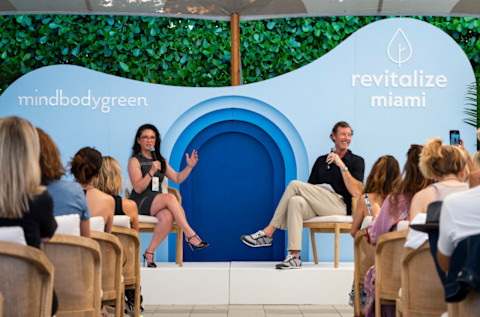
When the right people come together, good things happen. When those people are united by a passion for living well? Well, then that sounds like mindbodygreen’s 2025 Revitalize summit.
Gathering at a serene destination in Miami, a vibrant community of wellness visionaries came together for our tentpole summit—all with the goal of exploring the latest in health, longevity, and strength. From thought-provoking conversations and cutting-edge wellness insights to energizing activations and moments of true connection, the atmosphere was electric.
Couldn’t join us in Miami? No worries—we’re bringing the magic to you. Here are the most powerful, perspective-shifting takeaways from our experts that you won’t want to miss.
1. We deserve to take up space & be strong
The unfortunate truth is that many people—women, especially—have been conditioned to feel undeserving of putting themselves and their health first. But the primary message from renowned orthopedic surgeon Vonda Wright, M.D., is that strength is something we all deserve.
“I just want to encourage you that you are worth taking up some space. You are worth being strong,” she said to our audience during the kick-off Q&A. “You are worth putting in the work to avoid the future that I see in my orthopedic practice all the time, which is one of frailty.”
To avoid frailty, part of what Wright preaches is practical: Eat more protein, lift heavy weights, move aerobically.
But the other part is mental.
“Develop an unbreakable mindset,” she says. “That means knowing that we can have control over situations and not be the passive victim. It means being committed to a goal, whether it’s never becoming frail or something else in your life. And finally, realizing that we have agency to make small choices that can change our very trajectory of our health. We are not the victims of the passage of time.”
2. Total rejuvenation is a multisensory experience
In today’s always-on environment, it can feel almost impossible to find a moment of calm. In fact, a Lincoln survey of over 1,000 adults found that more than half of Americans (53%) say their greatest barrier to de-stressing is simply finding a suitable place to unwind.
So, at our Lincoln Rejuvenate Lounge, we explored how to create a space that can actually help you unwind. Inspired by the Lincoln Rejuvenate feature found in the Lincoln Nautilus and the all-new 2025 Navigator, the lounge was a dedicated third space where our guests could center themselves amid a busy day—complete with hand massages, a fragrance bar, and the opportunity to test out the Lincoln Rejuvenate feature in an on-site Lincoln Navigator or Nautilus.
Lincoln’s Rejuvenate feature is a multisensory in-vehicle experience with the profound ability to relax both mind and body. It includes adjustable seats with built-in massage and warming functions designed to help melt away tension. Immersive, soothing lighting and ambient soundscapes set the stage for mindful meditation. And Lincoln Digital Scent technology transforms the space into an aromatic sanctuary, using the power of olfactory stimulation to enhance mood.
“The Rejuvenate feature—it massages you, plays calming visuals and audio, even releases a light scent—I mean, that’s next-level relaxation. I honestly didn’t realize how many things I now consider essentials until I experienced them all in one place,” said one Revitalize guest after testing out the feature.
And according to a study conducted alongside Purdue, participants who tried the Rejuvenate feature actually felt the benefits—not just anecdotally, but according to hard data. In the study, they experienced slower and more consistent heart rates (33 ms improvement), showed a calmer nervous system response (5 ms improvement in heart rate variability), and exhibited brain activity patterns that indicated greater relaxation and reduced stress levels.
To learn about Lincoln Rejuvenate, just listen to mindbodygreen co-founder and co-CEO Jason Wachob: “This is a well-being car,” he says. “What they are doing with the Lincoln Rejuvenate feature is incredibly relaxing. I am like the biggest fan of this vehicle. It is the coolest car I’ve ever been in.”
3. Don’t skip base camp
The wellness world can feel overwhelming. In trying to keep up with the latest gadgets and protocols, it can make anyone feel like they’re falling behind. But mobility coach Juliet Starrett assures us that the most profound and powerful tools are the ones we can fit in daily.
“What we’re seeing in the longevity space is a lot of people trying to skip base camp. If you’re climbing Everest, you have to spend six weeks acclimating at base camp before making the ascent,” says Starrett. “But in this space, people are jumping straight into the climb—they’re doing red light therapy, cold plunges, saunas—which is all fine; I’m not against any of it. The problem is, they’ve skipped the fundamentals.”
And those fundamentals? It’s the lessons that have been tested by time.
“Our perspective is master the basics first. Once you’ve done that, then you’ve earned the right to experiment with the gadgets. For us, the basics—what we call ‘base camp’—are simple: Walk 8,000 steps a day, sit on the ground for 30 minutes, eat fruits and vegetables, get 0.8 gram of protein per pound of body weight, strength train four to five days a week, and sleep eight hours a night. That’s it. Nail those, and then build from there.”
4. The importance of third spaces for mental well-being
Third spaces have become an important part of the wellness conversation, as they serve a vital function in our mental and physical health. They are the places outside of our home (first space) or work (second space) that we turn to for relaxation, connection, or time just for ourselves.
In our Q&A, made in partnership with Lincoln—our premier partners at Revitalize—we looked into how vehicles may be an underutilized space to promote well-being. In fact, with the right features, our vehicles may be the ideal third space.
“ One way I think we could think about a third space is that you have an origin and a destination. So, what’s that in between space?” says Damon Riggs, product planning and strategy manager at Lincoln, who spoke with Wachob. “This could be metaphorically or literally. In a vehicle, it’s both. Literally, you’re going from point A to B. But metaphorically, it’s also a place to get in that right mind space. We want Lincoln vehicles to be a place you can transform.”
Explaining the science of a third space environment, Riggs noted how making small sensory upgrades can dramatically improve our well-being. For example, Lincoln’s Auto Air Refresh “uses sensors inside and outside of the vehicle to measure the air and ensure that the air in the cabin is as healthy as it can be,” he said. “Air quality—CO2 levels, particulate matter, all that stuff—is correlated with health and even cognition.”
Lighting can be an important element too, Riggs notes. For example, Lincoln‘s approach to both natural and artificial light kept full-body health in mind.
As a BetterHelp affiliate, we earn compensation from BetterHelp if you purchase products or services through the links provided.
Starting therapy should be exciting. Support and guidance from a licensed therapist can make it easier to deal with the natural ebbs and flows of life. But it’s easy to feel intimidated by the process, especially when there are so many misconceptions floating around about therapy.
Ahead of your first session, we’re breaking down the biggest myths about therapy to help ease any lingering fears—so you can prioritize your mental health without apprehension.
The biggest myths about therapy
Therapy is an expensive luxury.
The average cost of an in-person therapy session in the United States is about $100 to $250 without insurance. Seeking out a therapist with sliding scale pricing is a great way to find an option within your budget—but that’s not the only way to save!
Online therapy is up to 50% more affordable than in-person options with platforms like BetterHelp. Similar to with in-person therapy, these licensed mental health experts can integrate a range of evidence-based therapy techniques to help reflect on the last year (and reimagine what’s ahead). It’s also far more approachable, with appointments available from the comfort of your home.
2. Online therapy isn’t as efficient as in-person therapy.
Still doubting the benefits of telehealth? Research shows online therapy is just as effective as in-person therapy for treating common mental health conditions with physiological support. Plus, chatting online can be easier for people who are just starting out with therapy—so you can start out with texts or live chats and progress to video call as you get more comfortable with your licensed expert.
Just remember: It’s important to make sure any online therapist is credentialed. For example, BetterHelp vets each professional by verifying their therapist’s license, education, and clinical experience. In some cases, licensed experts even complete case studies to assess their clinical skills.
Ultimately, what you get out of therapy is what you put in—and your preferred appointment type won’t get in the way of your progress.
BetterHelp
mindbodygreen readers can save 25% on their first month with our link.
Therapy gives you the tools to unpack the past, handle the presence, and plan for the future. While some people feel like they have enough tools to tackle a big project after preparing for a few months, others might want to revisit the instructions a few times or add one more hammer to their toolbox.
All that to say, there’s no “right” amount of time to work with a licensed therapist. You might realize that you prefer short bouts of support during hard times, or you might discover that consistent weekly support is essential for you to thrive. Either way, it’s about deciding what works best for you with the help of your therapist.
4. Therapy is only for rehashing the past.
Most of us share the same vision of therapy: You’re lying on an uncomfortable leather couch and somberly discussing your family history. And while therapy will definitely help you to understand how your current behaviors came to be, it’s also a useful tool for creating the future you want.
With 2025 officially underway, you have a blank slate to write your story. Allow your therapy sessions to help you enter a new chapter with techniques and strategies that allow you to build your best self.
5. You have to stick with the same therapist.
Think of finding a therapist as being like dating. You won’t always immediately match with the right person—and it can take a few first dates until you find a connection worth pursuing.
Opting for a flexible platform like BetterHelp lets you shop around for a licensed therapist without figuring out new payment methods. What’s more, you can easily sort through 30,000 options to find one that meets your needs, location, and preferences.
6. You’ll feel transformed after your first therapy session.
If only therapy was as simple as attending one session and feeling like a new person—but it’s work. Many people won’t actually start to see the impact of therapy on their lives for at least a few months or even a year. Don’t get discouraged! Every minute of therapy is building the foundation for the future you want.
The takeaway
Whether you’re dealing with a breakup, job stress, or family disagreements, therapy can be a helpful tool for getting a handle on your mental health. As you consider starting therapy, remember these common misconceptions to ensure you’re entering this next stage of life with excitement—not anxiety.
Before we commence with the festivities, I wanted to thank everyone for helping my first book become a Wall Street Journal bestseller. To check it out, click here.
Living a good life means managing your time. Problem is, we don’t understand time at all. Go ahead, explain time to me; I’ll wait.
Don’t blame yourself. To be fair, the nature of time has been a matter of some debate for, oh, a few thousand years now. Aristotle said time wasn’t real. (I know some people who live like this but they tend to get fired a lot.) Aristotle thought time was just a measurement of change. If nothing changes, there is no time. That simple.
Then Newton showed up on the scene and said the exact opposite: time is not only real, but it’s also objective, independent and universal. Be at work by 9AM — and your 9AM better be the same as work’s 9AM.
It took Einstein to break up the fight. He said they were both kinda right. Newton was correct that time is real. But Aristotle was on to something when he said it’s not universal. Einstein realized time is warped by gravity and speed. A universal “now” doesn’t exist. Theoretical physicist Carlo Rovelli says that asking what “now” is for someone light years away is like asking which football team won the basketball championship. The question doesn’t even make sense.
And when we get down to the level of quantum mechanics, hoo-boy, time is weirder than the love child of Salvador Dali and David Lynch. At the quantum level there is no difference between past, present and future. No cause and effect, only probabilities. Only one thing matters in the quantum realm: how things relate to one another.
I know, I know, with the exception of that Newtonian clock time, this sounds like it has nothing to do with real life. But it does. I swear. Because there’s another kind of time, one that doesn’t fall under physics, and one that is even more important than clock time: internal time. Time in your head.
And that can be weirder than anything physics has come up with. But, in the end, it’s the only time that matters.
The worth of a great day is not measured by the space it occupies in the calendar.
Does time on the clock have any relationship to how meaningful the moments of your life are to you? Barely at all. March wasn’t a better month because it had 31 days to February’s 28.
The Newtonian clock ticks by consistently but inside our heads, well, “time flies when you’re having fun” or something “takes forever.” And we’re not crazy. Subjective perception of time is real. When you’re in a car accident, time does seem to slow down. And, yes, time really does seem to speed up as you get older.
All due respect to Sir Isaac, it’s the other forms of time that are more like the one in our heads. Per Aristotle, if nothing is happening in your life, if there’s no change, you forget those moments. Time collapses. And like Einstein, our internal time is not universal. A moment can be very meaningful to me and be irrelevant to you. And, like quantum mechanics, when you look back on your life, all that matters are moments in relation to other things: to our feelings, to our values, to other people.
But Newton isn’t letting us off that easy. He’s still there. If we don’t make the most of those hours on the clock, we don’t create the moments that will matter to us internally. And clock time so often slips through our fingers. So how do we control time?
Well, we can’t. But we can make time special so it registers with us internally.
We can only solve the problem of time through sanctification of time… We must not forget that it is not a thing that lends significance to a moment; it is the moment that lends significance to things.
Heschel was writing about the Sabbath. A ritual. He said:
The Sabbath itself is a sanctuary which we build, a sanctuary in time.
We can’t control Newtonian time, but we can use it to create moments that are meaningful to us internally. And once there, time can stop for us to savor it. We can reverse time, as in the pleasures of nostalgia. And we can project forward in time through anticipation and hope. Rituals create this magic.
So how do we get started?
Rituals
I’ve said it before and I’ll say it again: the number one ritual we need to do each day is… more rituals.
Rituals are not so much about what you do; they’re about the meaning you give to what you do. They don’t have to be tied to religion or spirituality. They can be subjective and personal. They’re sacred because you decide they are, to you.
But what makes a ritual? Ministry innovation fellow at Harvard Divinity School, Casper ter Kuile says there are three elements:
Intention
Attention
Repetition
Sounds kinda like we talking about habits. But habits are the opposite of rituals. Habits are an effort to make things less conscious, less intentional, more automatic. But with rituals we want to increase intention. We want to pay more attention. We don’t want to do these things robotically, sleepwalking through life. Habits are forgotten in internal time. Rituals are not chores on autopilot; they are miniature celebrations. We don’t engage less, we engage more.
When building habits, you’re doing something new. But we want to take what you already do and ritualize it. To give your current moments of external time more internal meaning.
That zoo of odd little things you do every day can be taken to a higher level. Reading, taking a relaxing bath, going for a run, going to see grandma, they can all be something special with intention, attention and repetition. Heck, turn that afternoon nap into something meaningful.
Don’t be afraid to take little things a little more seriously. Allow them to be special. Give them your full attention. Savor them. A new perspective on any activity can transform it. Suddenly, it’s brand new. And when you do it, you feel like a million bucks, like you’re in an “Irish Spring” commercial.
The banal can become the sacred with intention, attention and repetition. You don’t need someone else to tell you what the meaningful practices of your life are. Is a family tradition of watching “Shrek” any less significant because you came up with it yourself?
(To learn more about how you can lead a successful life, check out my bestselling book here.)
The possibilities are endless, only constrained by your imagination — but it’ll be easier to get started if we’re more concrete. Let’s begin with a hard one. Can work benefit from a ritual? You better believe it…
The “Getting To Work” Ritual
Work is rarely fun. Often, just thinking about it can make you feel like Eeyore on a bad day. You don’t even want to get started. But a “getting to work” ritual can actually reduce procrastination.
When I spoke to Charles Duhigg, bestselling author of The Power of Habit, he suggested we try a “getting to work” ritual. Here’s Charles:
One way to use habits to fight procrastination is to develop a habitualized response to starting. When people talk about procrastination, what they’re usually actually talking about is the first step. In general, if people can habitualize that first step, it makes it a lot easier.
Yeah, he said “habit.” But actually, it’s more like a ritual. He suggested you do something fun. Not robotic but engaging. Something that puts you into the right mood. Yeah, even surfing the web or playing video games. A little bit of whatever makes you feel good. Just get the momentum going and then direct that toward the day ahead.
And rituals aren’t just something that helps kill the pain of work. When I spoke to Harvard Business School professor Francesca Gino, she told me her research shows that a little ritual before you get started can actually make you perform better.
Athletes are known for having some crazy rituals they do before they play to boost their confidence. Guess what? Those rituals work.
Here’s Francesca:
Some of the pregame routines that some of the players have are kind of funny. What we studied in this project was whether these rituals are really of beneficial effect in terms of bringing you confidence and potentially impacting your performance positively. That is actually what we found.
(To learn the two-word morning ritual that will make you happy all day, click here.)
So a little ritual can help you get more done. But rituals are also powerful when it comes to doing less…
Try A “Secular Sabbath”
These days we hear a lot about taking a “technology sabbath”, a break from the chitter chatter of the social media maelstrom. (One of the worst parts about the internet is it has given the dumbest people on the planet direct access to one another.) Too much time online can make you crazy.
But we can take this to another level by not limiting it to technology and having a full-on secular sabbath. Designating a time away from all of the frantic hullabaloo of life. No errands, no goals, no checklists. It’s not deprivation; it’s celebration. Playtime. There used to be these things called “hobbies” before the internet came along and swallowed them whole. They’re fun. Trust me.
This is critical for maximizing internal time. Chip and Dan Heath looked at the science and found that “The most memorable periods of our lives are when we break the script.” What’s that mean?
Research shows that when older people look back on their lives, a disproportionate number of their big memories happened in a very narrow window: between ages 15 and 30. Why? Because after 30, life can get pretty darn boring. After their third decade has passed, most people don’t do anything as novel as falling in love for the first time, leaving home, going to college, or starting their first job.
We need novelty to make more smile-worthy memories and fashion a meaningful life. But it’s not all about looking in the rear-view mirror. Neuroscientist David Eagleman found that when you inject novelty into your life, internal time expands. Surprise stretches time. So break the script. Do new fun things. This is how you create more moments worth remembering.
(To learn the 4 harsh truths that will make you a better person, click here.)
So far we’ve discussed solitary rituals. But as we saw with quantum mechanics, the universe is fundamentally about the relations between things. You’re no different. So what’s the best type of ritual to have with others you care about?
“Struggle” With Friends
No, don’t get in a fight. But the Heath brothers looked at the research and saw that what deepens connections with others is struggle – the good kind.
Anthropologist Dimitris Xygalatas (say that three times fast) found that groups that went through “high-ordeals” bonded far more than those that went through “low-ordeals.” Struggling together made people closer. This is why fraternities haze. Why soldiers feel like they are kin.
Now you don’t have to do that much struggle. But consider a ritual less like movie night and more like board games with teams. Fewer coffee catch-ups and more touch football. If it ends with high-fives, you’re probably in the ballpark.
Or have a ritual where you help a friend accomplish something. Work on their car together or paint their bathroom. Sounds silly but these are the moments we remember. Studies show that, counterintuitively, spending time on others makes us feel less time-constrained.
So what’s a ritual that we can engage in with friends that is already definitely on the calendar? Hey, ya gotta eat…
Mealtime Rituals
The Japanese tea ceremony. Saying grace before dinner. Breaking the Ramadan fast. Rituals around meals go back forever and have profound meaning across almost all cultures and religions.
So take a second before a meal with friends and acknowledge how special the moment is. Any such gesture can become a ritual — just add intention, attention, and repetition. And they make a difference…
Ever do a toast before you drink? It made your drink taste better. Yes, really. By focusing your attention on what you drink or eat, studies show those little rituals help you enjoy those moments more. Here’s Francesca Gino again:
Think about rituals that you engage in prior to consumption experiences. What they do, they make us a little bit more mindful about the consumption experience that we are about to have. Because of that, we end up savoring the food or whatever we are drinking more, we enjoy the experience more, and in fact, we’re also more willing to pay higher prices for whatever it is that we just consumed. Once again, rituals are beneficial in the sense that they create higher levels of enjoyment in the experience that we just had.
But mealtime rituals don’t just improve the taste of food. They can also improve marriages, and make your kids healthier. Having regular family dinners is crazy powerful.
According to a study published in the Journal of Family Psychology, “In families with predictable routines, children had fewer respiratory illnesses and better overall health, and they performed better in elementary school.” The article added that rituals have a greater effect on emotional health, and that in families with strong rituals adolescents “reported a stronger sense of self, couples reported happier marriages and children had greater interaction with their grandparents.”
You can also have a dinner party with friends and do a little ritual beforehand. (After a year of pandemic lockdown, I want to hug my friends so close that it might qualify as adultery.)
Intention and attention are critical but don’t forget about repetition. Try and make something regular, even if it’s annual. This is how convention becomes tradition. And it will contribute to the growth of your relationship over time as you can look back (and look forward) to the times you have together.
Organize a group meal like this and you get a twofer: you add rituals that expand your internal time, but you also give that gift to those you love. Ain’t nothing better than that. Do this and your greatness will be sung by bards for generations to come.
(For more on how to motivate yourself to exercise, click here.)
Okay, we’ve covered a lot. (Hopefully the time went by quickly.) Let’s round everything up and find out about the ritual you have just unknowingly engaged in…
Sum Up
Here’s how to use rituals to improve your life:
Time is crazy. Internal time is what matters: You don’t judge your life as a collection of hours but as a collage of meaningful moments.
Rituals make time meaningful: “It is not a thing that lends significance to a moment; it is the moment that lends significance to things.” Intention. Attention. Repetition.
“Getting to work” rituals: Do something fun before you get started to get yourself in gear and you’ll reduce procrastination and perform better.
Try a secular sabbath: Take a time-out from the world and break the script. Novelty expands time and makes memories.
“Struggle” with friends: Board games and sports. Or work on something together. Ironically, giving time away makes you feel like you have more time (a fact that makes quantum mechanics seem logical by comparison.)
Mealtime rituals: Make dinner with loved ones special and memorable. Or combine it with some “struggle” and have a food fight. (C’mon, like that wouldn’t be memorable?)
“Time” is the most commonly used noun in American English. We find it, lose it, save it, waste it and spend it. It flies, crawls and stands still. Sometimes we are out of it and other times we claim to have all there is in the world. But just thinking about how much time we waste is enough to rend your soul. Errands and responsibilities build up until the ticks weigh more than the dog.
The external time of the clock isn’t going anywhere but internal time is how we will judge our lives. So use rituals to build meaningful moments that will shape your life for the better. Don’t worry if your rituals seem a little odd or silly at first. As Irwin Kula said: every tradition was once an innovation.
Some of my posts are easy to write but others are harder. The latter take more reading, more thinking, and more editing. For this one, yeesh. Studying the physics of time, the Sabbath and other traditions, the science of rituals and meaningful moments… If I was looking for any sort of direct return on this investment of time and energy, well, this post was unequivocally “ROI negative.” But that’s not why I do it.
Writing is my ritual. Sacred to me in a personal way. A chance to learn, and to share as I learn. To inspire and give hope (or at least try to). It can be a lot of work, but sharing it with you is the best part. I know my time is not going to waste. I hope you find rituals that are as meaningful to you as this is to me.
Fundamentally, time is absolutely bonkers-crazy but that can be a good thing. The weirdness of internal time means the smallest moments can have the biggest impact on your life.
During her journey through Wonderland, Alice asks the White Rabbit, “How long is forever?” And the White Rabbit replies:
He’s married with a young child and handles all the responsibilities that come with being a husband and dad.
He blogs regularly about productivity and expert performance.
And yet he finishes work at 5:30PM every day and rarely works weekends.
No, he does not have superpowers or a staff of 15. Okay, let’s you and I both stop being jealous of his productivity for a second and learn something.
Below you’ll get Cal’s secrets on how you can better manage your time, stop being lazy, get more done — and be finished by 5:30. Let’s get to work.
1) To-Do Lists Are Evil. Schedule Everything.
To-do lists by themselves are useless. They’re just the first step. You have to assign them time on your schedule. Why?
It makes you be realistic about what you can get done. It allows you to do tasks when it’s efficient, not just because it’s #4.
Until it’s on your calendar and assigned an hour, it’s just a list of wishful thinking.
Here’s Cal:
Scheduling forces you to confront the reality of how much time you actually have and how long things will take. Now that you look at the whole picture you’re able to get something productive out of every free hour you have in your workday. You not only squeeze more work in but you’re able to put work into places where you can do it best.
Assigning work to times reduces the urge to procrastinate. You are no longer deciding whether or not to work during a given period; the decision is already made.
Does this sound too mechanical? Overly structured and not much fun? Wrong.
This study was designed to identify the relationship between free time management and quality of life, exploring whether the amount of free time or the way people using their free time relates to their quality of life… The result has found a positive relationship between free time management and quality of life.
(To learn more about the science of a successful life, check out my bestselling book here.)
Okay, the to-do list is in the trash and things are going on the calendar. How do you prioritize so you’re not at work forever?
2) Assume You’re Going Home at 5:30, Then Plan Your Day Backwards
Work will fill the space it’s given. Give it 24/7 and guess what happens?
You need boundaries if you want work/life balance. But this also helps you work better because it forces you to be efficient.
By setting a deadline of 5:30 and then scheduling tasks you can get control over that hurricane of duties.
Cal calls it “fixed schedule productivity”:
Fix your ideal schedule, then work backwards to make everything fit — ruthlessly culling obligations, turning people down, becoming hard to reach, and shedding marginally useful tasks along the way. My experience in trying to make that fixed schedule a reality forces any number of really smart and useful in-the-moment productivity decisions.
Anything that increases your perception of control over a situation — whether it actually increases your control or not — can decrease your stress level.
Over and over, scientists see that the perception of control over a stressor alters the stressor’s impact.
(For more on how to achieve work/life balance, click here.)
You’ve drawn a line in the sand and worked backward, giving all your tasks hours in your day. But how do you handle longer term projects?
3) Make A Plan For The Entire Week
I think you’ll agree that the last thing this world needs is more short term thinking.
You’ll never get ahead of the game by only looking at today and never thinking about tomorrow.
How do you write books, teach classes, meet with students, do research papers and be a good parent consistently? Plan the week.
Here’s Cal:
People don’t look at the larger picture with their time and schedule. I know each day what I’m doing with each hour of the day. I know each week what I’m doing with each day of the week and I know each month what I’m doing with each week of the month.
Are you rolling your eyes? Does this sound overbearing? It’s simpler than you think. What’s really necessary?
Just one hour every Monday morning. Here’s Cal:
Every Monday I lay out a plan for the week. I go through my inbox, I go through my task list, I go through my calendar and try to come away with the best thing to do with each day this week. I write it in an email and I send it to myself and leave it in my inbox because that’s a place I know I will see it every day and I’ll be reminded of it multiple times throughout the day.
Preliminary analysis from CEOs in India found that a firm’s sales increased as the CEO worked more hours. But more intriguingly, the correlation between CEO time use and output was driven entirely by hours spent in planned activities. Planning doesn’t have to mean that the hours are spent in meetings, though meetings with employees were correlated with higher sales; it’s just that CEO time is a limited and valuable resource, and planning how it should be allocated increases the chances that it’s spent in productive ways.
Maybe you think it’s enough to run down the week’s duties in your head. Nope.
You’re judged on what you do best so if you want to have as much success as possible you’re always better off doing fewer things but doing those things better. People say yes to too much. I say no to most things. I’m ruthless about avoiding or purging tasks if I realize they’re just not providing much value.
You feel like you have no time but John Robinson, the leading researcher on time use, disagrees. We may have more free time than ever.
He insists that although most Americans feel they’re working harder than ever, they aren’t. The time diaries he studies show that average hours on the job, not only in the United States but also around the globe, have actually been holding steady or going down in the last forty years. Everybody, he says, has more time for leisure.
So what gives? It feels like you have no time because it’s so fragmented with little annoying tasks that drain the life out of you.
(For more on what the most successful people do, click here.)
Your plans are in order and by doing less, it all fits on the schedule. But one question remains: what exactly should you be doing with your time?
5) Less Shallow Work, Focus On The Deep Stuff
All work is not created equal. Cal says knowledge workers deal with two fundamentally different types of work, Shallow and Deep:
Shallow work is little stuff like email, meetings, moving information around. Things that are not really using your talents. Deep work pushes your current abilities to their limits. It produces high value results and improves your skills.
And what’s the problem? Most of us are “drowning in the shallows”:
People who are the most busy often are getting a lot less done of significance than the people who are able to stop by 5PM every day. That’s because the whole reason they need to work at night and on the weekends is because their work life has become full of just shallows. They’re responding to messages, moving information around and being a human network router. These things are very time consuming and very low value.
Nobody in the history of the universe ever became CEO because they responded to more email or went to more meetings. No way, Bubba.
Cal has it right: Shallow work stops you from getting fired — but deep work is what gets you promoted.
Give yourself big blocks of uninterrupted time to make things of value. What’s the best first step?
Stop checking email first thing in the morning. Tim Ferriss, author of the international bestseller, The 4-Hour Workweek, explains:
…whenever possible, do not check email for the first hour or two of the day. It’s difficult for some people to imagine. “How can I do that? I need to check email to get the information I need to work on my most important one or two to-dos?”
You would be surprised how often that is not the case. You might need to get into your email to finish 100% of your most important to-dos. But can you get 80 or 90% done before you go into Gmail and have your rat brain explode with freak-out, dopamine excitement and cortisol panic? Yes.
The knife went in two millimeters from his carotid artery. He describes those two millimeters as the difference between being “flown home in the cargo hold instead of in coach.”
Luckily, he made a full recovery. How does he describe the event?
“It was one of the best things that ever happened to me.”
He was so grateful to be alive that for the next year, it was impossible for him to be unhappy.
Except for the ten or fifteen minutes during which it looked like I was about to die, which I would prefer not to relive, getting stabbed wasn’t even among the worst experiences of my life. In fact it was one of the best things that ever happened to me. After my unsuccessful murder I wasn’t unhappy for an entire year.
This is the power of gratitude.
No, I’m not encouraging you to get stabbed in the neck but we’ve all felt how happy being grateful can make us.
In fact, happiness researcher Sonja Lyubomirsky says gratitude is one of the things the happiest people on Earth all share.
Gratitude is arguably the king of happiness. What’s the research say? Can’t be more clear than this:
…the more a person is inclined to gratitude, the less likely he or she is to be depressed, anxious, lonely, envious, or neurotic.
Gratitude has one of the strongest links to mental health and satisfaction with life of any personality trait—more so than even optimism, hope, or compassion. Grateful people experience higher levels of positive emotions such as joy, enthusiasm, love, happiness, and optimism, and gratitude as a discipline protects us from the destructive impulses of envy, resentment, greed, and bitterness. People who experience gratitude can cope more effectively with everyday stress, show increased resilience in the face of trauma-induced stress, recover more quickly from illness, and enjoy more robust physical health.
But there’s one problem with gratitude — it wears off. Inevitably, we all end up taking things for granted.
And Tim Kreider wasn’t any different. What happened after that year of lucky-to-be-alive bliss?
You can’t feel crazily grateful to be alive your whole life any more than you can stay passionately in love forever— or grieve forever, for that matter. Time makes us all betray ourselves and get back to the busywork of living. Before a year had gone by, the same everyday anxieties and frustrations began creeping back. I was disgusted to catch myself yelling in traffic, pounding on my computer, lying awake at night worrying about what was to become of me. I can’t recapture that feeling of euphoric gratitude any more than I can really remember the mortal terror I felt when I was pretty sure I had about four minutes to live.
We all have moments of gratitude. The question is how can we stay grateful and happy all the time?
You need to build gratitude into your routine instead of making it a lucky accident.
Below are four rituals, backed by scientific research, that can help you stay grateful and happy. You don’t have to do them all and you don’t have to do them every day.
But working one of them into your schedule on a regular basis can go a long way toward keeping you smiling.
1) Count Your Blessings
This technique has been proven again and again and again. Here it is, explained by its originator, University of Pennsylvania professor Martin Seligman.
Every night for the next week, set aside ten minutes before you go to sleep. Write down three things that went well today and why they went well…Writing about why the positive events in your life happened may seem awkward at first, but please stick with it for one week. It will get easier. The odds are that you will be less depressed, happier, and addicted to this exercise six months from now.
That’s it. Just put a pen and paper by the bed, write down three good things that happened to you that day and why they happened. Then go to bed.
People are 25 percent happier if they keep gratitude journals, sleep one-half hour more per evening, and exercise 33 percent more each week compared to persons who are not keeping these journals.
Do you need to do it every day? Nope. People saw optimal results when they did it once a week.
(For the secret to never being frustrated again, click here.)
So you thought about the good things that happened to you. Know what else can help? Thinking about if good things didn’t happen to you…
2) Absence Of A Blessing
It must feel great to win a gold medal in the Olympics. But surprisingly, research shows it feels better to win a bronze than a silver. Why?
People who win the silver think about how they didn’t win the gold. Those who get the bronze feel grateful to have received a medal at all.
Research shows that when you imagine that an important positive event in your life (like meeting your spouse) never happened, it makes you appreciate it more, makes you grateful — and happier.
Thinking about the absence of something positive in your life produces more gratitude and happiness than imagining its presence. What would your life be like if you had not met your spouse? If you did not live in your current neighborhood? If you had not had that chance encounter with the stranger on the plane who later became a business associate?… By taking something away in our minds, we become more aware of benefits that we still have but previously took for granted. Mentally subtracting something good from your life can make you more grateful for it. Think of an aspect of your life for which you feel grateful and then write about the ways in which this might never have happened (e.g., “what would have happened if I had never met my wife?” as opposed to “I am so grateful to have met my wife”).
For bonus points you can actually subtract something positive from your life. Not forever, mind you.
In my interview with Harvard professor Mike Norton, author of Happy Money: The Science of Smarter Spending, he explained that taking a break from something you love and “making it a treat” can boost appreciation and happiness:
…if you love having coffee every day, don’t have it for a few days and and then when you have it again, it’s going to be way more amazing than all of the ones that you would have had in the meantime.
Yes, this scientifically validates that Netflix binges make you less happy than watching shows weekly. Sorry.
(For more on the shortcut to bonding with a romantic partner on a deeper level, click here.)
What’s the third ritual? This one will surprise you.
Sometimes even when bad things happen they can ultimately have positive consequences, things we can now be grateful for. Choose an experience from your life that was initially unpleasant and unwanted. Try now to focus on the positive aspects or consequences of this difficult experience. As the result of this event, what kinds of things do you now feel thankful or grateful for? Has this event benefited you as a person? How have you grown? …How has the event helped you appreciate the truly important people and things in your life? In sum, how can you be thankful for the beneficial consequences that have resulted from this event?
Every year, Tim Kreider celebrates his “stabbiversary.” He remembers the day he got stabbed in the throat — and how lucky he is to still be alive.
One of the most effective ways to deepen your own gratefulness is to write a letter of gratitude to an important person in your life whom you’ve never properly taken the time to thank and then visit that person to present him or her with the letter. Studies published in the most rigorous scientific publications show that the gratitude visit can increase happiness and decrease depression in the letter writer for as long as three months after the visit!
Bring tissues. You will cry. They will cry. You will both be very happy. And it will be something you will never forget.
(For more on how to write your letter and make yourself and someone you love incredibly happy, click here.)
Okay, let’s round these techniques up — and add in one more little thing that’ll make you happy right now.
Sum Up
Four ways to boost gratitude and happiness:
Write down three good things that happened to you that day before you go to bed.
Imagine something meaningful to you never happened. Then appreciate how lucky you are to have it.
Think about something bad that happened to you — and how it made you feel lucky to have gotten past it and how you have grown.
Do a gratitude visit. Write a letter of gratitude to someone who has done something for you and read it out loud to them in person.
I’m grateful for a lot of things. My supportive parents. My friend Gautam’s awesome “interesting people” dinners. My buddy Andy’s weekly Friday lunches…
And you, dear reader, I am grateful that you take the time to read what I write.
Even if you don’t get around to doing any of the four things above, I encourage you — right now — to send a thank you email or text to someone who has been good to you.
In my interview with Harvard happiness researcher Shawn Achor he said this tiny gesture can make a big difference in your happiness. He’s tested it over and over:
The simplest thing you can do is a two-minute email praising or thanking one person that you know. We’ve done this at Facebook, at US Foods, we’ve done this at Microsoft. We had them write a two-minute email praising or thanking one person they know, and a different person each day for 21 days in a row. That’s it. What we find is this dramatically increases their social connection which is the greatest predictor of happiness we have in organizations.